Funny Deux Chevaux Car With Pig
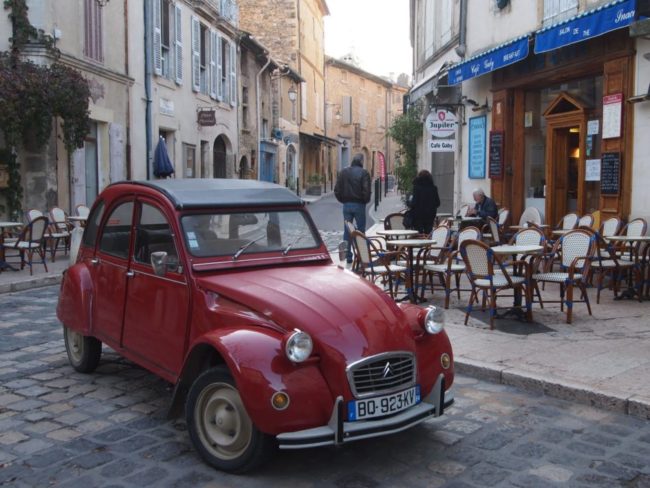
I always wanted a Deux Chevaux. I first saw that much beloved French car when I first visited Paris in 1972. I remember thinking that something that funny looking must have been a model car project gone terribly awry. A sardine tin on wheels. But there were so many…partout.
My grandfather, with whom I was traveling, along with my grandmother, had a certain fondness for the car, an affinity that should not have surprised me since he and my grandmother had owned one of the first Corvairs and drove it back and forth across the country, from New York to California, in the early 1960s. He said it was a famous French car called, technically, a Deux Chevaux Vapeur which, in English, meant "two steam horses." Of course the name only added to the intrigue.
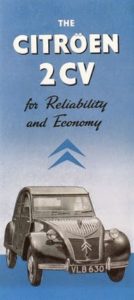 The 2CV was the brain child of Pierre Michelin, who became president of Citroën in 1934 when Michelin (tire manufacturer) purchased the bankrupt car company. He wanted to produce a low-cost, durable "umbrella on four wheels" for farmers to take their goods to market. The development project would be called Toute Petite Voiture (TPV) or "Very Small Car."
The car was to be minimalistic and yet wholly practical. As now famously defined in the original specifications, the TPV had to be able to carry a basket of eggs on the seat, across a plowed field without breaking a single one, a requirement that ensured the little car could also comfortably accommodate four adults under other circumstances. Bearing in mind that this was a car geared toward "peasants," other (rather ambitious) goals included the capability of driving 50 kilos of farm goods to market, going 50 kilometers/hour (31 mph) and using 3 liters of gas to travel 100 kilometers (or less than a gallon of gas to go 60 miles).
In 1939, 250 TPVs were produced for final testing purposes and by the summer of the same year, the quirky car with a nine- horsepower engine (less than half the size of today's riding lawn mower) was ready to be unveiled. Its name would be Citroën CV, reflecting its "tax horsepower" which, at "2," it was at or very near as cheap as one's license plates could get.
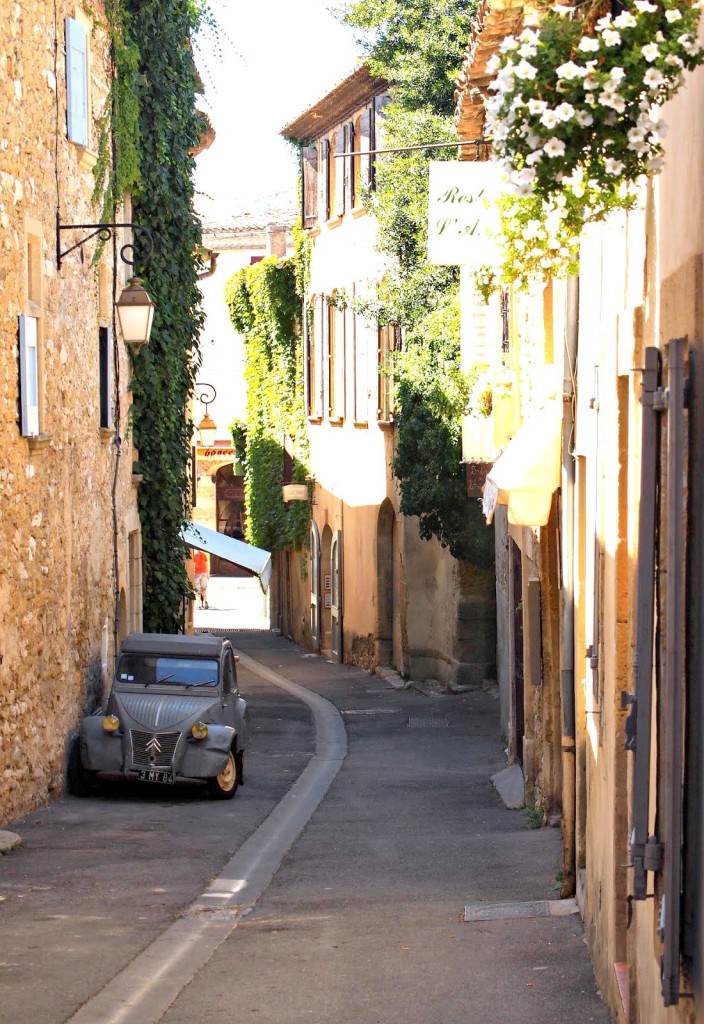
A old 2CV in Lourmarin is a frequent "star" in the
many photos taken by tourists.
Sadly, war broke out and plans for release were abandoned until 1945. For fear of the Germans using the car for military purposes, the whole project was abruptly halted and kept completely under wraps during the war. Many of the prototypes were destroyed but several were buried in locations so top secret that they were not found for years. (It seems that only five TPVs have ever been found.)
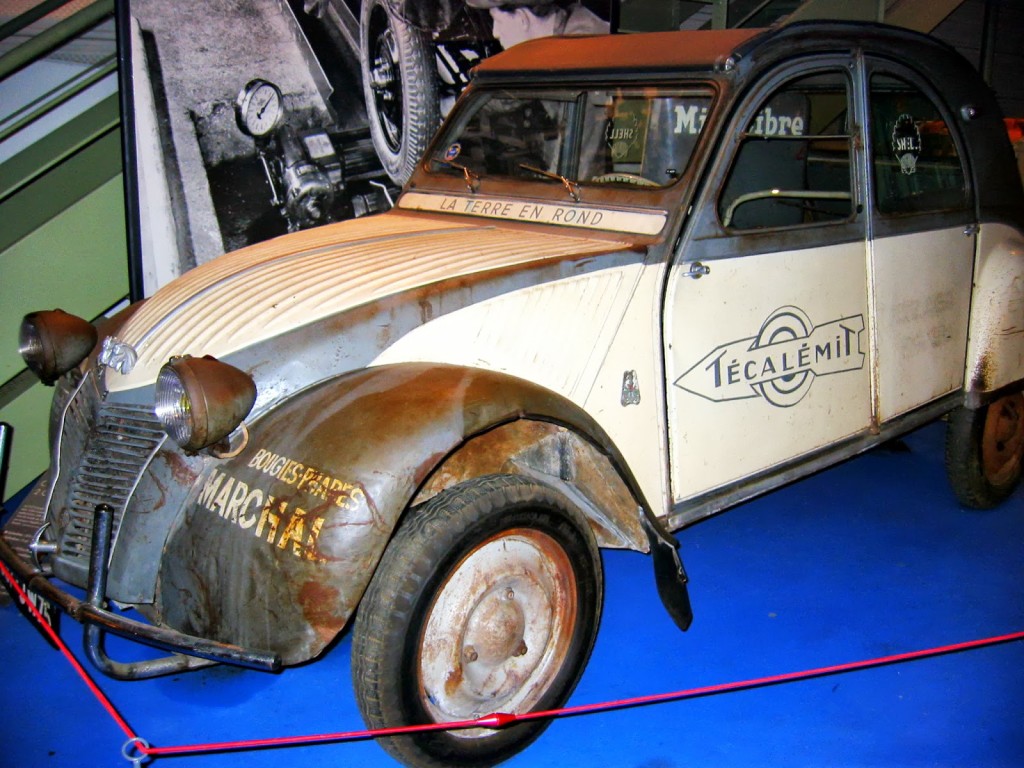
The first car to go around the world in 1958. Now on display at a museum in Sarthe
After the war, in 1948, the 2CV was finally launched. It was enthusiastically received by consumers at the Paris Salon in October of that year and orders quickly piled up. Auto reviewers were less impressed, however, and wrote unfavorable reviews including quips like "Does it come with a can opener?" (Admittedly, it looks like it ought to.)
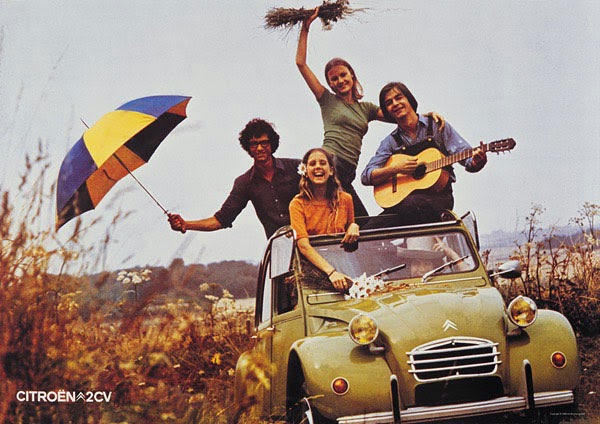
An old 2CV poster
Production continued for 42 years. Nearly 4 million 2CVs were made and over a million Fourgonnettes (2CV delivery vans).
This funny looking car is referred to as a "trailblazer" among other small cars in the mid-20th century. It had front-wheel drive, four–speed manual transmission (very unusual in this era), a sophisticated suspension system, an air-cooled engine and inboard front brakes (also uncommon). The engine was very lightweight: a 425 cc two-cylinder engine that weighed just 100 pounds (45 kg).
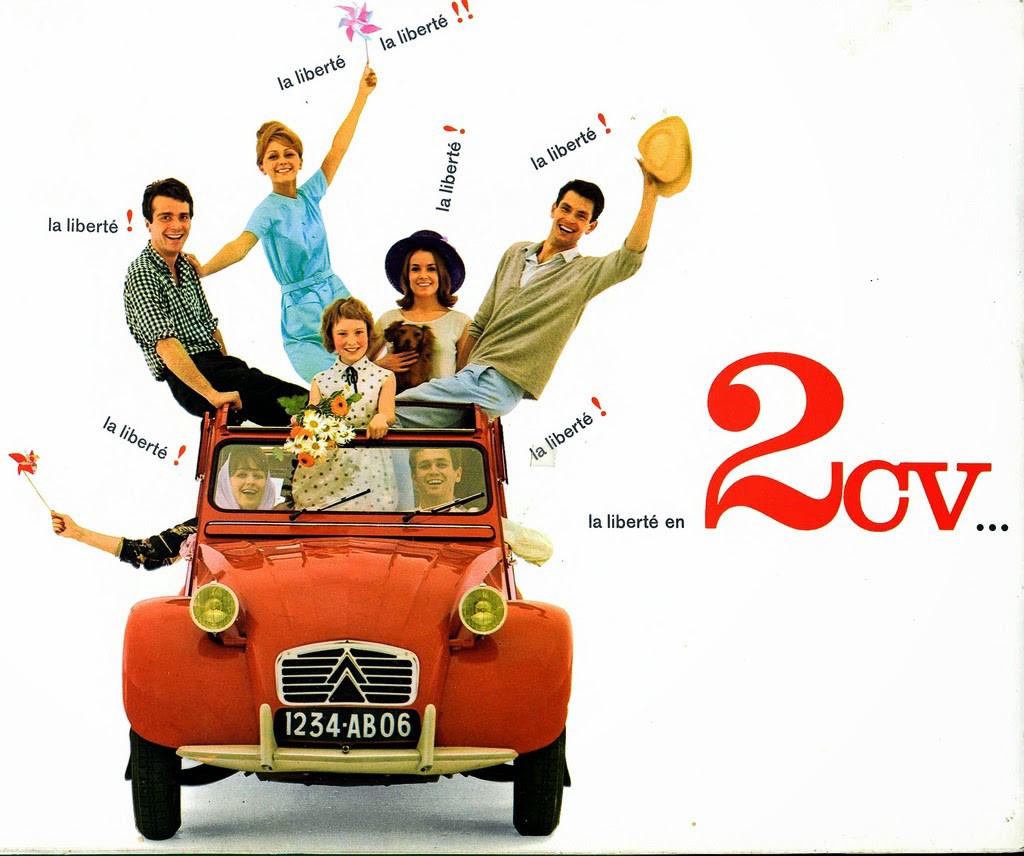
2CV ad
The windshield wipers were ingenious: they were powered by a cable that was attached to the transmission and the speedometer resulting in a wiper speed that depended on the speed of the car. Thus, when the car stopped, the wipers stopped; but the back-up plan was a handle (inside) so that they could be operated manually!
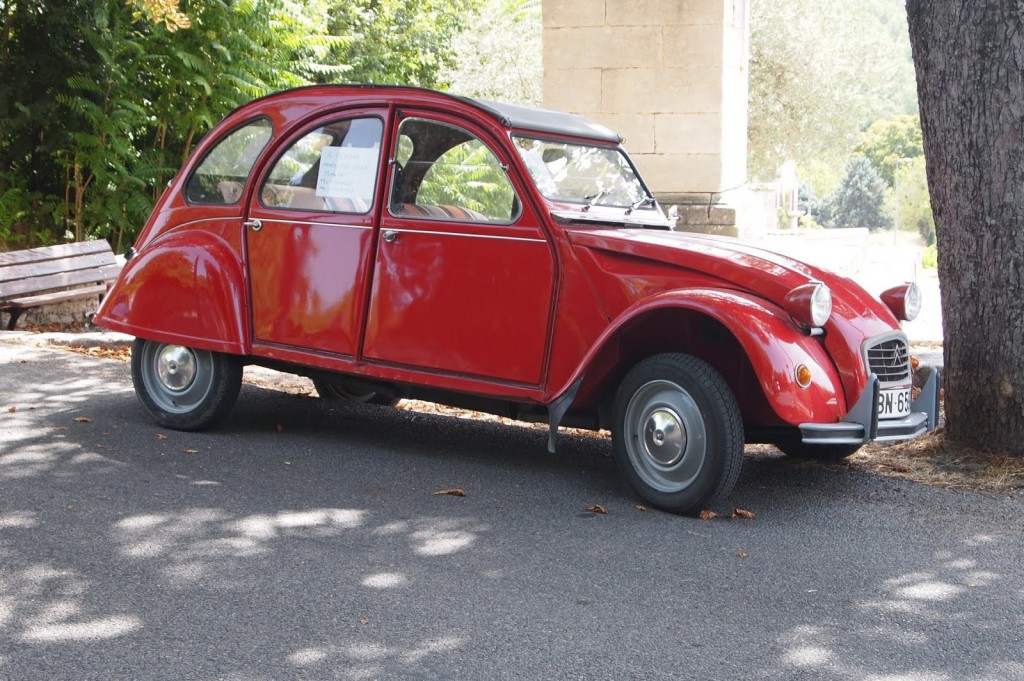
As the years passed, the cars got faster and more luxurious (relatively speaking). Even James Bond drove a high-performance model in one of his famous high-speed chases in For Your Eyes Only.
In the late 1980s, the 2CV's popularity was waning. In addition, it was not rating well in crash-testing and anti-pollution requirements. The last 2CV rolled out of production on July 27, 1990.
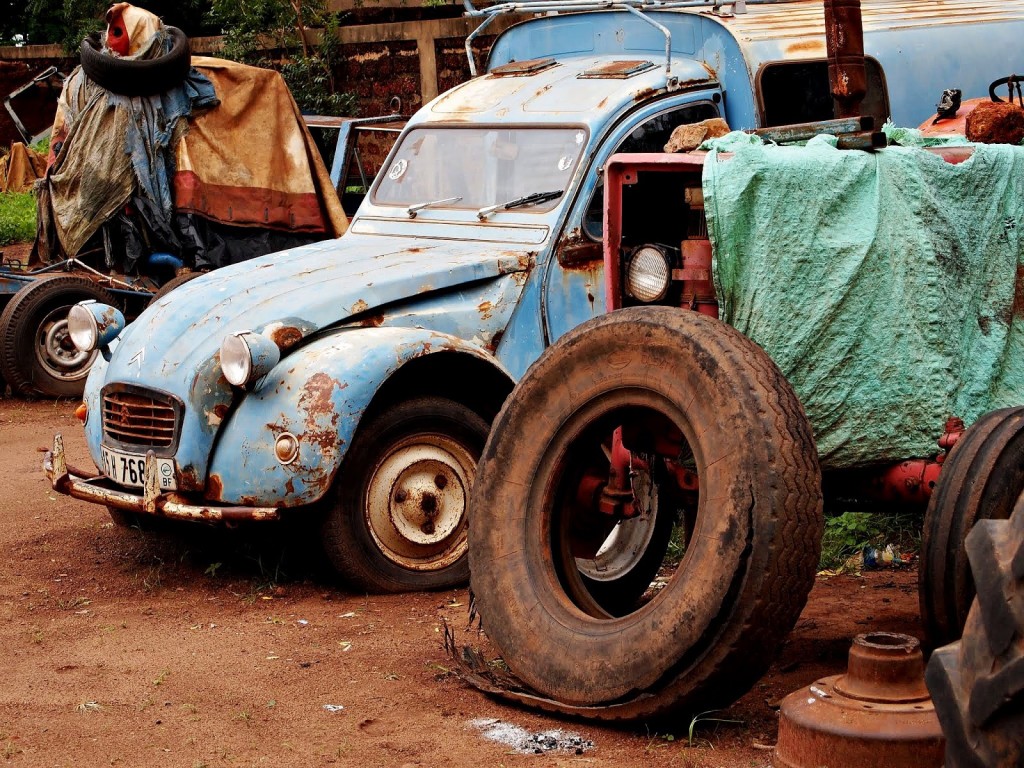
A 2CV rusting gracefully in Ouagadougou
I hasten to say that the Deux Chevaux is experiencing a comeback! According to Michael Vaughan in The Globe and Mail, "If you've been in Paris recently, you've seen fleets of restored Deux Chevaux painted in bright colours driving stylish tourists around the sights." In the States, there are long waiting lists for rebuild 2CVs, with waiting times as long as eight months. There is even talk of a new release by Citroën: a 3CV!
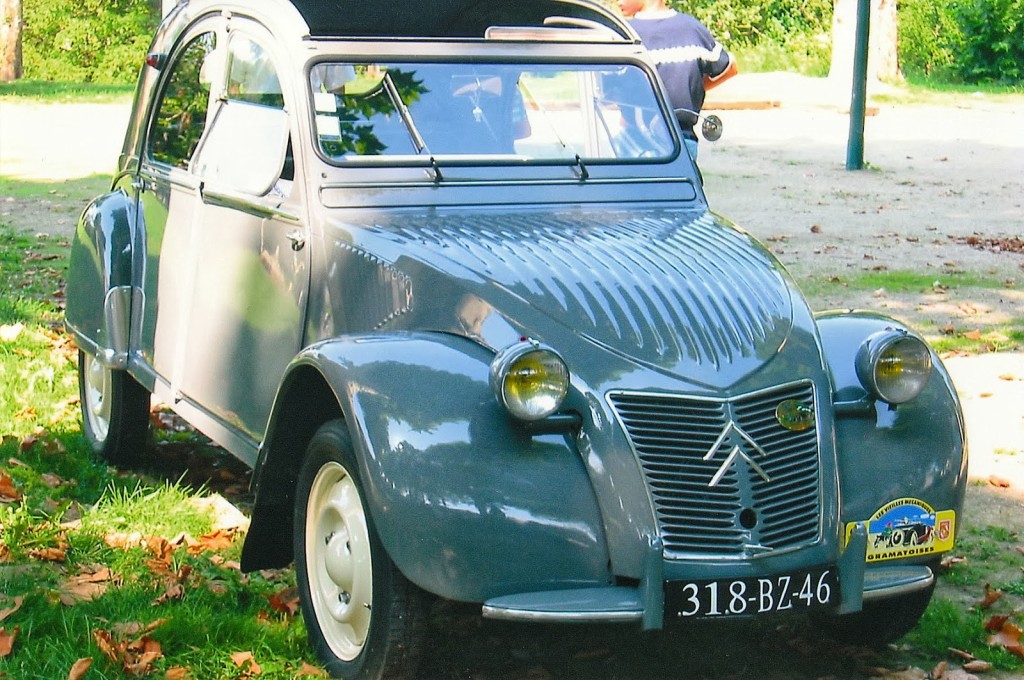
An immaculately restored early 2CV
I still would love to have a tin snail. They now go for about $25,000, fully restored (compared to, for example, $1195, original, in 1955). My husband urges me to drive one first—he's certain I would give up this silliness but I am certain a spin around Lourmarin would only serve to solidify my covetousness. There are places to rent them in Provence and I think I may do that one day….In the meantime, I am deciding on colors.
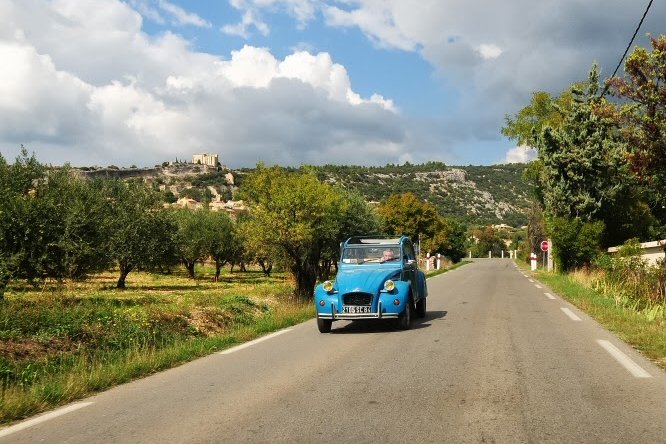
A 2CV in Provence. Photo by FS Gilbert.
Source: https://www.provencewinezine.com/the-citroen-2cv-i-love-that-tin-snail/

Post a Comment for "Funny Deux Chevaux Car With Pig"